 Inside RK
Machines do not
run themselves
INSIDE RK
When Simon
Sets the Pace
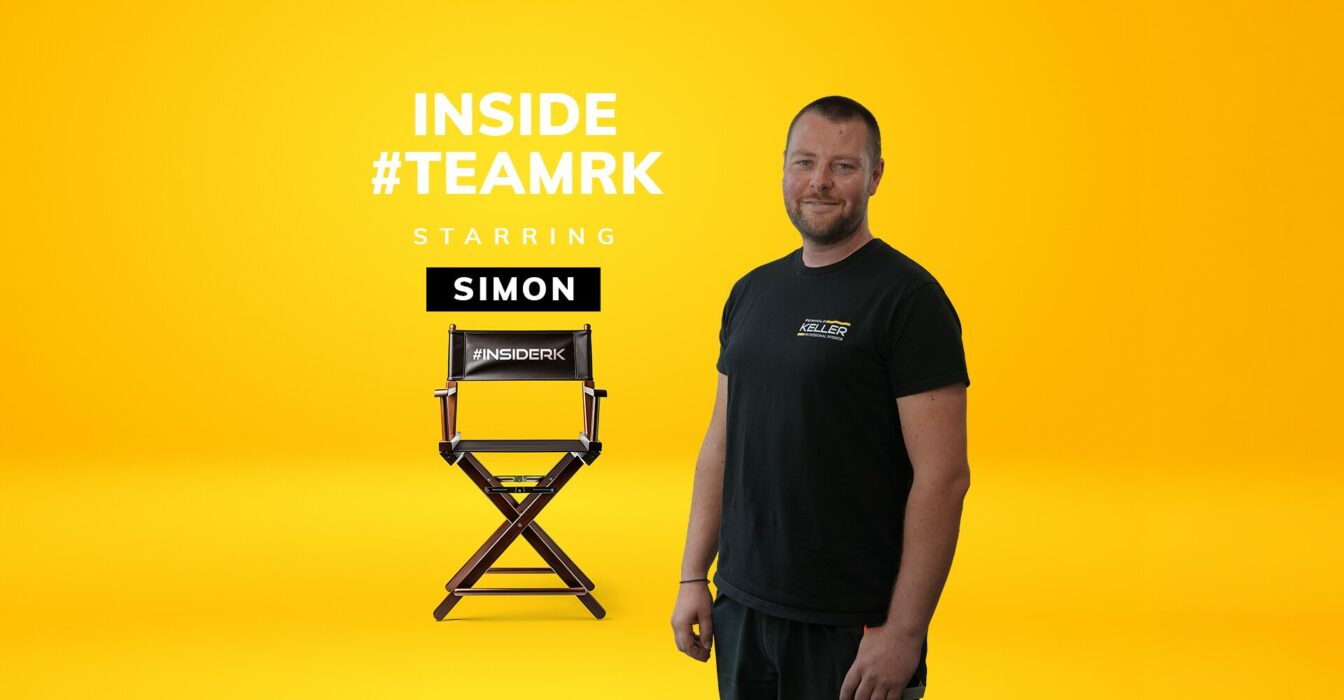
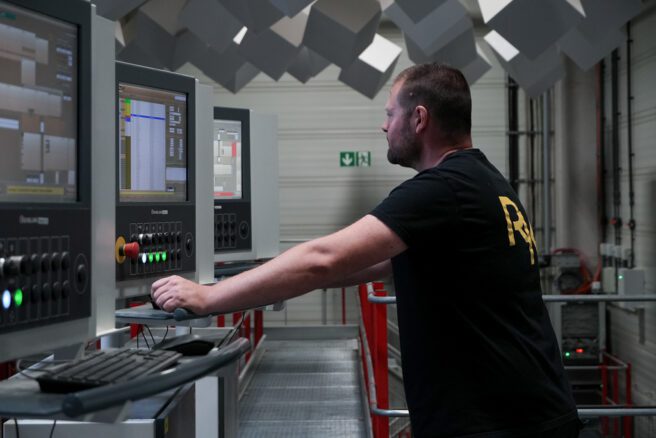
Pressing buttons, watching the machine, calling it a day. That is how some people imagine the job of a machine and equipment operator. Simon knows this image and has to laugh about it. Anyone who sees the 35-year-old working at the LS1 quickly realizes how little this cliché has to do with reality. Simon plans ahead, listens to the sound of the system, and sets the pace for an entire production section.
For Simon, machines do not simply run. He starts a chain of processes. What is cut on his systems moves on to edge banding, the drilling machine, the press, CNC, or the bench area. If material is missing there, the entire process slows down. If something goes wrong at the front, several workstations further down the line feel the impact immediately.
Back to Wood
Simon began his career as a woodworking technician at a company in our region. From 2007 to 2022, starting in 2014 as a team leader. Large industrial machines, production quantities, specifications, and production pressure became part of his everyday work early on. “That teaches you to keep an overview,” he says.
At the same time, the gym became a fixed part of his life. First as a passion, then as a side job, and later as a professional station. Starting in 2022, Simon managed the clever Fit studio in Aschaffenburg. At first glance, it was a new start. At second glance, it was an experience that fits his current job very well. Organization, team leadership, responsibility. He lived all of that there every day.
The contact with REINHOLD KELLER eventually came through clever Fit. Since 2024, he has been part of our #TEAMRK. He does not need to explain this decision at length. “It simply fits me well. I feel very comfortable here,” he confirms.
The LS1 Does Not Wait
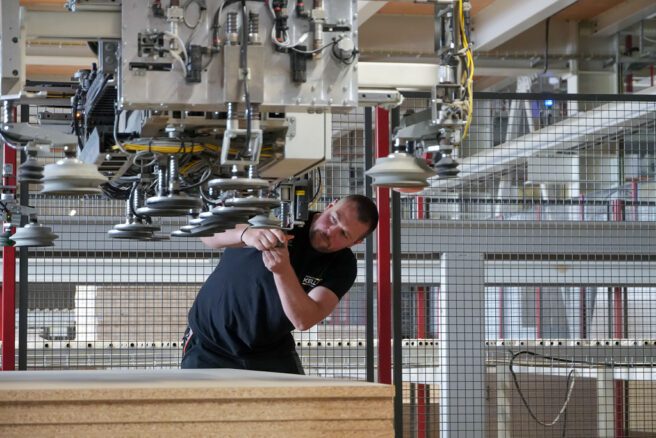
Today, Simon works on two LS1 systems. These are fully automated panel saws designed for industrial furniture production in lot size 1. The systems operate according to a circular flow principle. Panels are cut from one, two, three, or four sides, and each part moves directly to its next position in the production flow.
Up to 1,500 parts per day are possible. To make sure this number looks good not only on paper, it takes more than routine. Simon sets up, changes over, operates, monitors, and adjusts production to match what the following workstations need.
“You always have to think roughly 60 minutes ahead,” he says. For him, this view ahead is an essential part of the job. Which parts will be needed soon? Which station needs new material? Where must there be no gap? Simon does not just work on one machine. He keeps an entire system moving.
HEARING WHEN SOMETHING IS WRONG
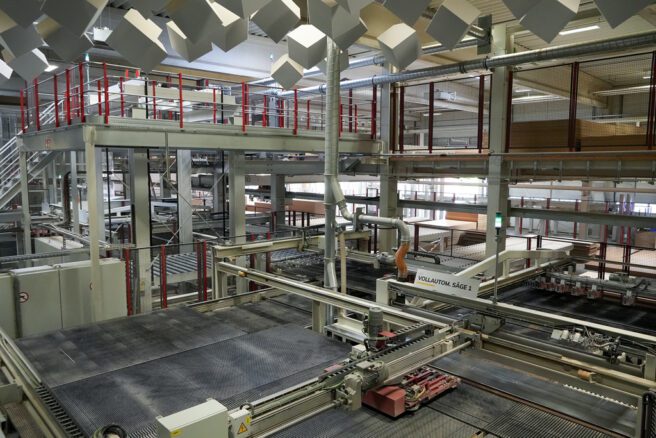
For him, quality does not begin with the finished part. It begins with the sound of the systems. “You need to have an ear for the machines,” he says. A slightly different noise, an unfamiliar movement, a brief moment that requires attention.
Manual skill, technical understanding, improvisation, and an eye for quality are the foundation for him. Much of it comes with experience. Above all, staying calm when something does not go as planned.
When the systems cause problems, Simon remains structured and keeps a cool head. When possible, he lets them run empty in a controlled way. Then he searches for the error, narrows it down, and fixes smaller malfunctions himself. For larger defects, technicians, mechanics, or electricians join in. “That is when it is best to always have a coffee at hand,” he says with a grin.
Coffee suits him anyway. Communicative and addicted to coffee is how he describes himself. Both help in day to day production, especially when quick coordination is needed and several areas come together.
ONE WRONG BUTTON PRESS IS ENOUGH
What many people underestimate is the responsibility. A system like the LS1 is not a piece of equipment you simply let run. Every decision has an effect. Every delay can have consequences. “A 20 cent screw can shut down a machine worth millions,” Simon says.
One wrong button press can cause hours of production downtime and, in the worst case, bring the entire chain to a standstill. And that is exactly what makes the job appealing to him. Varied, responsible, and interesting is how Simon describes his work. No day follows the same pattern. Requirements change, processes shift, small malfunctions occur, priorities change. Anyone working here has to stay alert at all times.
A Future with Machines
Simon would recommend training as a machine and equipment operator to young people. Not because it is easy. Rather, because it offers a great deal. “Every day brings something new. It never gets boring,” he confirms. It is also a professional field that continues to develop. In production, more and more processes are controlled and carried out automatically. Anyone who understands machines has many opportunities.
The cliché of simply watching machines still persists. Simon knows that. But he also knows that the reality is completely different. More movement, more responsibility, more variety. “Simply a job that is fun,” he says.
Alone on the Night Shift
One moment at REINHOLD KELLER has stayed with Simon to this day. His very first night shift. A situation in which you realize pretty quickly whether you know your systems. “You are not just standing there at the machine. You make decisions, react, and make sure everything keeps going, even when no one is standing next to you,” he summarizes.
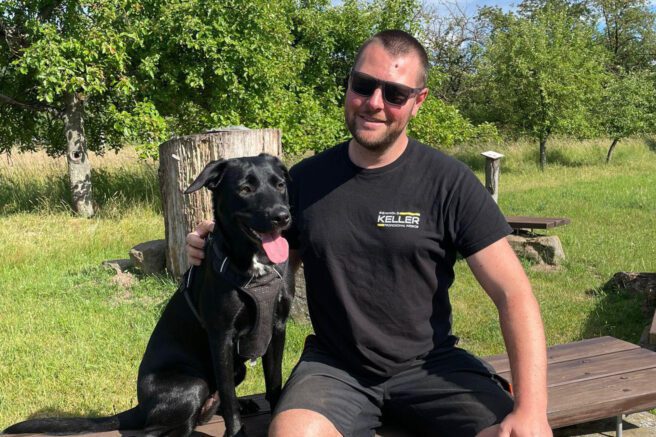
After work, Simon finds balance at the gym, on his bike, or mowing the lawn with loud music. During the day, he listens closely to the machine. After that, things are allowed to get a little louder.
At RK, he feels he has arrived. The working atmosphere, the team, the managers. For him, the overall package is right. When he talks about his future, it does not sound like an interim stop. “I feel so comfortable here that I would ideally like to retire here in 2051,” he says with a satisfied smile before turning back to his systems.
News
all news-
Inside RK
-
 Inside RK
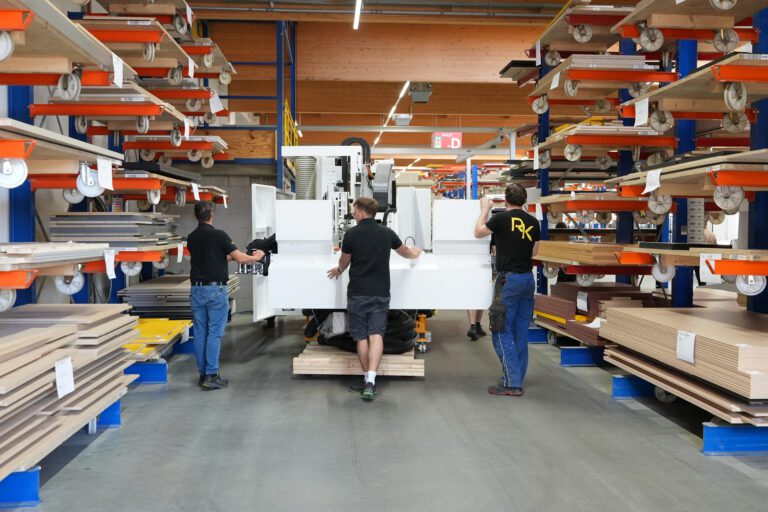
New CNC Technology for Our Production
-
 Inside RK
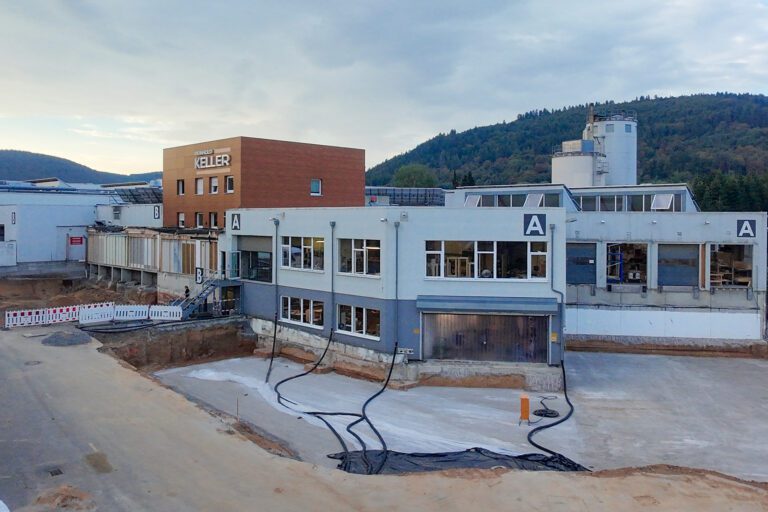
Production Expansion in Kleinheubach
-
 Inside RK
Dirk’s Eye for the Big Picture
-
 Case Study
Hotel Remodeling at Motel One Hamburg-Alster
-
 Inside RK
Apprenticeship? Nailed it!
-
 Engagement
1. Dreamers Cup 2026
-
 Case Study
The Cloud One Lisbon